
Hooklift Identification & Measurement Guide
When buying containers for your hooklift system, accurate identification and measurements are critical for ensuring the container is designed to match your specific hooklift. Each hooklift model has specific geometric requirements, and your container must be designed to match those exact dimensions. Incorrect measurements can lead to operational issues, structural damage, or unsafe conditions. This guide outlines how to identify your hooklift and how to take the key measurements your container manufacturer needs.
- Identify Your Hooklift
Find the Data Plate
Every hooklift includes a metal identification tag with:
-
- Make
- Model
- Serial number
- Rated capacity
This tag is typically located on the hook arm, jib section, side plates, or near the pivot area. Record the model exactly as listed.
- Critical Measurements Required
If the tag is missing or unreadable, identification must be done using structural characteristics or purchase records, not assumptions. If this is the case, measure and record the critical measurements outlined in sections A-E. Small differences in similar-looking models can result in incompatible container geometry.
Best Practices for Measurement
-
- Measure with the lift fully lowered in the resting position.
- Take each measurement twice
- Use clear photos to document each measurement point
- Confirm definitions (hook height reference point, rail centerline, etc.) with your manufacturer
- Never assume two hooklifts are alike – model accuracy is essential
- Hook Height
Measure hook height by taking a vertical measurement from the top of the hoist frame to the centerline of the hook with the arm fully lowered.

- Rail Spacing
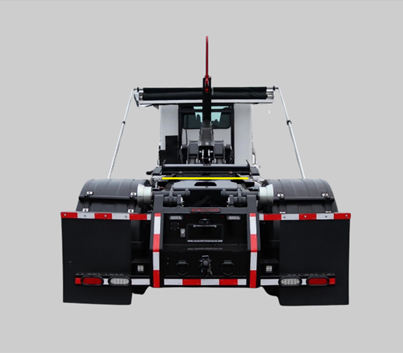
Measure the container skid rails from outside of rail to outside of rail. Also note any variations in rail height or width. Proper rail spacing ensures correct engagement with rollers or guides.
- Stop Locations
Measure:
-
-
-
- Distance from the front of the container rails to the front of the stop
- Height of the stops from the bottom of the skid rails to the top of the stop
-
-
Stops must align exactly with the hooklift’s hold-down points to keep the container locked during transport. Click here to view a step-by-step video on how to measure stop locations.

- Hook Pin Dimensions
Measure:
-
-
-
- Hook pin diameter
- Distance from the back of the A frame to the back of the pin.
-
-
These determine how the hook engages and lifts the container.

- Overall Container Length
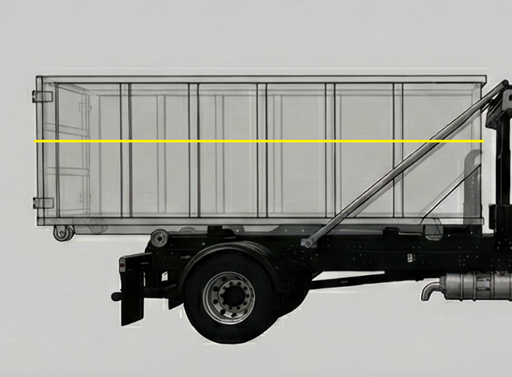
Measure overall container length. Some systems require specific container lengths or pickup distances to maintain proper loading angle and dump clearance.
Why Accurate Measurements Matter
Incorrect or incomplete measurements can create significant safety and performance problems. Incorrect hook height or improperly placed stops can cause the container to shift, unlock, or even detach during transport. Inaccurate dimensions may also lead to structural stress, pin damage, twisting rails, overloading one side of the container, or damaging the hook arm itself. Operational issues are common as well—binding during loading, misalignment with rollers, pinched rails, or a reduced dump angle all indicate that the container’s geometry doesn’t match the hooklift. Beyond equipment damage, incorrect fitment increases operator risk by forcing repeated pickup attempts or requiring the operator to stand or maneuver in unsafe positions.
Taking the time to correctly identify your hooklift and gather precise measurements ensures your container is engineered for a perfect fit, protecting your equipment, your operators, and your investment. As hooklift systems continue to grow in popularity, accuracy is more important than ever. When in doubt, document everything and share your details with your container manufacturer. A few extra minutes on the front end can prevent costly issues down the road and keep your operation running safely and efficiently.
If you have any questions, the Bucks team is here to help. Please email us at info@bucksfab.com or call us at (724) 253-3322.